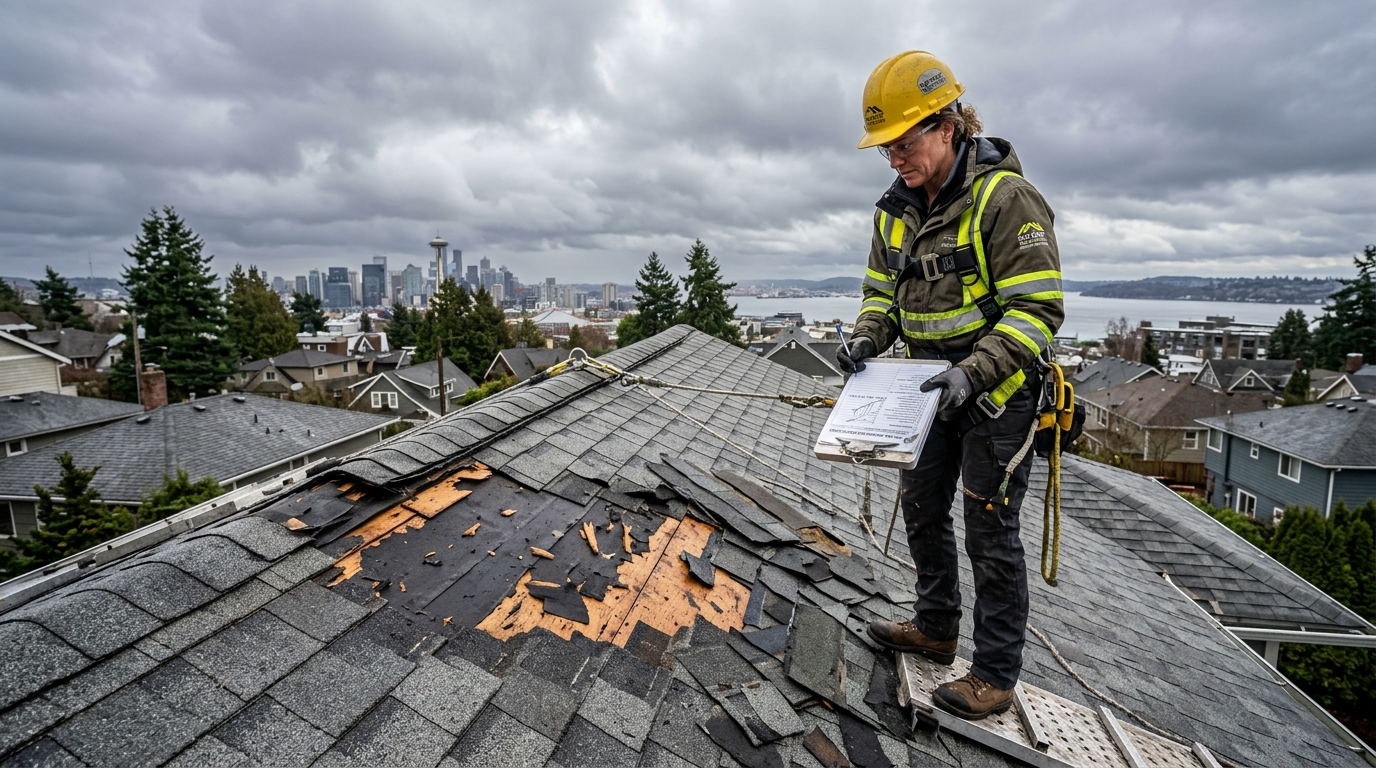
Every winter, severe atmospheric rivers and windstorms sweep through Puget Sound, bringing gusts over 50 mph to Burien, Des Moines, and Auburn. If shingles rip loose or a tree limb punctures your roof decking, the immediate question is financial: will your homeowner's insurance pay for the repair or a full roof replacement?
In Washington State, standard homeowner policies (HO-3 and HO-5) generally cover sudden and accidental wind damage. However, understanding the difference between covered peril and wear-and-tear is critical to receiving full claim compensation.
What is typically covered by homeowner's insurance?
- Blown-off shingles: When high winds physically detach asphalt shingles or cedar shakes.
- Impact damage: When falling limbs, trees, or debris strike the roof during a windstorm.
- Torn flashing and ridge vents: Wind-lifted metal flashing or compromised ventilation caps.
- Interior water damage: Water entering the home directly through an opening created by the windstorm.
What adjusters look for during their inspection
When an insurance adjuster steps onto your roof, they look closely for pre-existing maintenance issues versus fresh storm damage. Common reasons claims get partially denied include:
1. Deferred maintenance: If your roof was already heavily deteriorated or had extensive moss rot that weakened the shingle sealant, the adjuster may argue the wind did not cause the failure.
2. Age of roof: Some policies have Actual Cash Value (ACV) provisions for roofs over 15 or 20 years old, meaning they deduct depreciation from your settlement instead of paying full Replacement Cost Value (RCV).
Steps to take immediately after wind damage occurs
- Prevent further damage: Take temporary emergency mitigation steps, such as professional tarping, to prevent water from soaking your ceiling and insulation. Keep all emergency invoices.
- Document everything: Take clear photographs from the ground showing missing shingles, displaced ridge caps, and any interior leaks.
- Call a local roofer before filing: Having an independent roofer inspect the damage and provide an estimate first gives you the exact repair scope to present to your adjuster.
Need an estimate for your insurance claim?
K-Roofing & Repair provides detailed storm damage assessments and digital photo documentation formatted specifically for insurance adjusters across King County.
Learn about our insurance support →